Is Medical Weight Loss Worth the Cost?
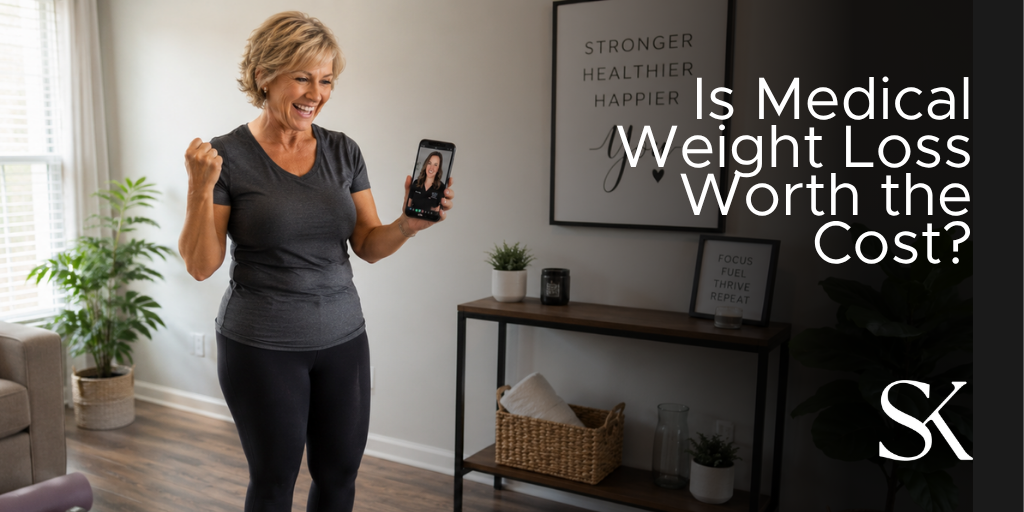
Is Medical Weight Loss Worth the Cost? What Most People Never Stop to Consider
There is a moment most people have when they start seriously researching medical weight loss. They find a program they are genuinely interested in, they click through to pricing, and something in them hesitates. The number feels significant. And without the full picture of what that investment actually includes, it is easy to close the tab and go back to doing what has not been working.
That hesitation is completely understandable. But it is worth sitting with for a moment, because the question most people are really asking is not just about price. It is about whether this time will actually be different. And that is a question worth answering properly.
At Skóra Skin Aesthetics, we believe that anyone seriously considering medical weight loss in Maitland, Longwood, Casselberry, or Altamonte Springs deserves the full picture, not a sales pitch. So let us talk through the real numbers, what a properly structured program includes, the risks of cutting corners, and how to think about a return on investment that goes far beyond what shows up on a scale.
What Does Medical Weight Loss Actually Cost?
This is the first thing people search for, and the answer is more nuanced than most sites let on.
The pricing landscape for GLP-1 weight-loss programs varies widely depending on what you are actually receiving. At the most basic end, online-only telehealth platforms offer compounded semaglutide starting around $149 to $299 per month. That number typically covers the medication shipment and little else. A one-page intake form is not a medical program.
Brand-name GLP-1 medications like Wegovy and Zepbound, without insurance, can run $1,300 to $1,600 per month for the medication alone, with provider visits billed separately on top of that.
In-person medical weight-loss programs that include licensed provider oversight, clinical monitoring, labs, and genuine ongoing support typically range from $300 to $600 per month, depending on what is included in the program. At Skóra, pricing is clearly published on our website, so you are never left guessing.
The reason that range matters so much is not just about what you spend. It is about what you are actually receiving and what happens when the medication alone is not enough.
What Is Actually Included in a Quality Medical Weight Loss Program?
Once people understand the price, the next question that naturally follows is: what am I paying for?
This is where the real comparison begins, because not all programs are the same product. A program that is worth the investment includes the following:
- A comprehensive initial medical evaluation that reviews your full health history, existing conditions, metabolic markers, and whether GLP-1 therapy is the right fit for your specific body before anything is prescribed
- Lab work to establish your baseline and identify underlying hormonal imbalances, blood sugar irregularities, or other metabolic factors that have been quietly working against your progress
- A licensed, credentialed provider who knows your chart, monitors your response, and adjusts your dosing as your body changes, not just a digital prescription handed out after a brief questionnaire
- Medication management, including titration, side effect monitoring, and plan adjustments when your body needs them
- Nutritional and behavioral guidance that addresses emotional eating patterns, stress responses, and the habits that have fueled the cycle you are trying to break
- Body composition tracking that measures visceral fat, lean mass, waist-to-hip ratio, and water retention rather than just total body weight
- Ongoing check-ins and accountability so that the momentum you build in week three does not fall apart in week seven when life gets complicated
At Skóra, the medical weight-loss program is built around these pillars. Groundbreaking medications, most commonly known as Ozempic or Mounjaro, are offered here under full medical supervision. These were originally developed to manage type 2 diabetes and are now widely recognized for their effectiveness in promoting significant, sustained weight loss. Clinical studies show that these medications can lead to a reduction of 10 to 20 percent of body weight over several months when combined with a healthy diet and regular exercise. Every prescription at Skóra is overseen by a licensed provider who monitors your progress closely and adjusts dosing based on your unique response and goals.
When you look at everything a properly structured program includes, the monthly cost looks very different from that of a subscription with a medication included. One is a transaction. The other is a relationship with a medical team that is invested in your outcome.
What Are the Risks of Online-Only or Discount Programs?
This is a question more people should be asking before they order.
The FDA has issued explicit warnings about unapproved GLP-1 products circulating online. Compounded versions of semaglutide and tirzepatide sourced through unregulated channels are not reviewed for safety, effectiveness, or quality before they reach patients. Some have been found to use unverified chemical forms that differ from FDA-approved versions. Others are improperly dosed, contaminated, or counterfeit.
Research published in peer-reviewed literature has also flagged that GLP-1 medications used without proper clinical oversight carry the potential to trigger or worsen restrictive eating behaviors in people with a history of disordered eating. A provider who does not know your full picture is not positioned to catch those warning signs early.
Beyond the product safety question, there is the matter of what happens when the medication is not enough on its own. Hormonal imbalances, cortisol-driven cravings, and metabolic dysfunction do not disappear because appetite is suppressed. Without the behavioral guidance, nutritional structure, and metabolic support built into a proper program, the body has not fundamentally changed. It has just been quieted temporarily. When the medication ends, or when adherence slips, the underlying patterns tend to reassert themselves. This is why having the right support structure in place from the beginning makes such a meaningful difference in long-term outcomes.
Is This Just About Suppressing Appetite, or Is There More to It?
This is exactly the right question to ask, and it is one that the cheapest programs do not answer well.
GLP-1 medications like Ozempic and Mounjaro work by mimicking the action of key hormones that regulate appetite, glucose metabolism, and insulin sensitivity. By targeting these pathways, they effectively reduce hunger, increase feelings of fullness, and promote significant weight loss. The clinical evidence behind semaglutide and tirzepatide is substantial and well-documented. These medications genuinely work.
But appetite suppression is a tool, not a complete transformation on its own. According to the World Health Organization, sustainable weight management requires addressing the behavioral, metabolic, and environmental factors behind weight gain alongside any pharmaceutical intervention. The Centers for Disease Control and Prevention similarly emphasizes that structured, supported programs produce significantly better long-term outcomes than isolated interventions.
What that means in practice is that long-term metabolic support changes how the body behaves, not just how hungry you feel on a given afternoon. The way the body stores and responds to stubborn fat is shaped by years of hormonal patterns, stress responses, and metabolic adaptation. A medication addresses the immediate symptom. A program addresses the system beneath it. The difference between the two is the difference between a temporary result and a lasting one.
What About the Emotional Side of Weight Loss?
Weight is never purely physical, and anyone who has ever lost the same amount of weight more than once already knows that.
Stress and emotional eating are among the most underaddressed contributors to weight gain and regain. Cortisol, the body's primary stress hormone, directly increases appetite and drives cravings for high-fat, high-sugar foods. Disrupted sleep amplifies hunger hormones. Busy, high-pressure lives in communities like Maitland and Longwood create the exact conditions where even the most motivated person finds their best intentions unraveling by midweek.
A medical weight loss program that does not account for this is missing a significant piece of the puzzle. At Skóra, every journey begins with a comprehensive one-on-one consultation that explores not just your health history but your emotional relationship with food, your stress patterns, your sleep and energy levels, and the specific lifestyle realities that have made this difficult before. That foundation shapes everything that follows.
Clients also receive ongoing guidance in mindful eating techniques, practical stress management tools, and behavioral coaching that builds the kind of accountability that helps results stick long after the program ends. Understanding why you eat matters just as much as understanding what you eat. That is not soft advice. It is evidence-based and built into the Skóra approach by design.
How Do You Measure Whether It Is Actually Working?
Progress in a properly structured program looks nothing like what most people have tracked before.
At Skóra, success is not reduced to a single number on a scale. It is tracked through fat percentage, lean mass, waist-to-hip ratio, water retention, and energy levels. Clients consistently report improvements in sleep quality, reductions in cravings, better digestion, and a steadier relationship with food, often within the first several weeks of the program.
The CDC notes that even modest, medically supported weight reduction produces measurable improvements in metabolic health, blood pressure, insulin sensitivity, and long-term chronic disease risk. These are not just aesthetic outcomes. They are health outcomes that compound meaningfully over time.
Feeling in control again, not just of body composition but of daily energy and confidence, is something clients describe as one of the most significant shifts they experience. That return to a sense of agency is part of what makes a properly supported program worth it in a way that is genuinely difficult to put a price on.
What Has Everything Else Actually Cost You?
Before deciding that medical weight loss is expensive, it is worth doing an honest accounting of what the alternative has cost.
Add up the gym memberships. The meal delivery subscriptions. The supplements with bold claims and fine print disclaimers. The programs that worked for a month and then collapsed. The time spent researching and restarting. The wellness industry in the United States generates over $70 billion a year, and a significant portion of that comes from people who are genuinely trying, cycling through approaches that were never designed for the complexity of real biology.
Choosing the right program is not just about finding the lowest monthly cost. It is about finding the approach that produces a result that actually holds. A program that creates lasting metabolic change is a fraction of the long-term cost of repeating the cycle indefinitely. The return on a real medical weight loss investment includes the money no longer spent on approaches that do not work. That reframe changes the math entirely.
Why Personalized, In-Person Care in Maitland Makes a Difference
There is something specific that proximity and relationship provide that no app or telehealth platform can replicate: a provider who sees you, knows you, and adjusts with you in real time.
Clients who visit Skóra Skin Aesthetics from Maitland, Longwood, Casselberry, and Wekiwa Springs receive that continuity. Medical weight loss in Maitland at Skóra means working with a board-certified family nurse practitioner who understands both metabolic health and the broader dimensions of transformation. Progress is tracked with real clinical data. Plans are adjusted when the body plateaus. And clients never have to navigate what to do next on their own.
For anyone who has ever felt like weight loss in Longwood and Maitland was becoming smarter and more supported across the board, that is exactly what Skóra is built around. The program goes beyond the scale because the goal was never just a smaller number. It was a better, more energized, more confident version of your daily life.
Frequently Asked Questions
Is medical weight loss covered by insurance? Coverage varies. GLP-1 medications like Wegovy and Zepbound are sometimes covered depending on your plan and diagnosis. HSA and FSA accounts can often be applied to medically prescribed treatments.
What is the difference between compounded and brand-name GLP-1 medications? Brand-name medications are FDA-reviewed for safety, quality, and efficacy. Compounded versions may be appropriate in specific circumstances, but only when sourced through a licensed pharmacy under proper clinical oversight. The FDA has cautioned consumers against unregulated compounded products sold online without medical supervision.
How quickly do results appear? Most clients notice meaningful changes in appetite, energy, and cravings within the first few weeks. Measurable changes in body composition typically develop over the first one to three months. Progress is individual and shaped by your metabolic starting point, consistency, and the depth of support in your program.
Do I have to follow a strict diet? No. Skóra's approach focuses on building sustainable habits that fit your real life, not a rigid meal plan that collapses the moment your schedule does.
Can this help with emotional eating or stress-related weight gain? Yes. Addressing the emotional and hormonal drivers of weight gain is built into the Skóra program. Behavioral coaching, mindful eating strategies, and stress management tools are part of the support you receive alongside medical treatment.
Do you see patients from outside Maitland? Absolutely. Skóra serves clients from Longwood, Casselberry, Wekiwa Springs, Winter Park, Altamonte Springs, and throughout Central Florida.
Ready to Stop Cycling and Start Changing?
The cost of medical weight loss is real. So is the cost of staying stuck. At Skóra Skin Aesthetics, every client in Maitland, Longwood, and the surrounding communities receives a program built around their specific biology, their goals, and their life, not a template.
Schedule your consultation today and find out what a genuinely personalized, medically guided approach looks like for your body.
View current specials | See all services